Power Generation
Coordinate every energy source behind one grid connection
Coordinate wind, solar and storage resources behind a shared grid connection with local PPC control and central operations.
Operational problem
Renewable and hybrid plants combine multi-vendor equipment, point-of-connection constraints, local control and portfolio reporting. Visibility without a defined control boundary leaves operators with fragmented evidence and uncertain action paths.
EnergyPortal provides central operations and governed analytics, enPowerManager owns qualified plant-level control, Scadify connects and executes at the field edge, and Enlogy engineering defines integration, testing and commissioning responsibilities.
Core capabilities
Shared export-limit management
Configured according to the project’s data, control, approval and operating boundaries.
Source priority and allocation
Configured according to the project’s data, control, approval and operating boundaries.
Wind, solar, biomass, hydro and storage combinations
Configured according to the project’s data, control, approval and operating boundaries.
Curtailment and production-priority evidence
Configured according to the project’s data, control, approval and operating boundaries.
Master/slave control-role architecture
Configured according to the project’s data, control, approval and operating boundaries.
Products and delivery responsibilities
Assemble the operating stack around the action.
Operational workflow
From operational context to measured action.
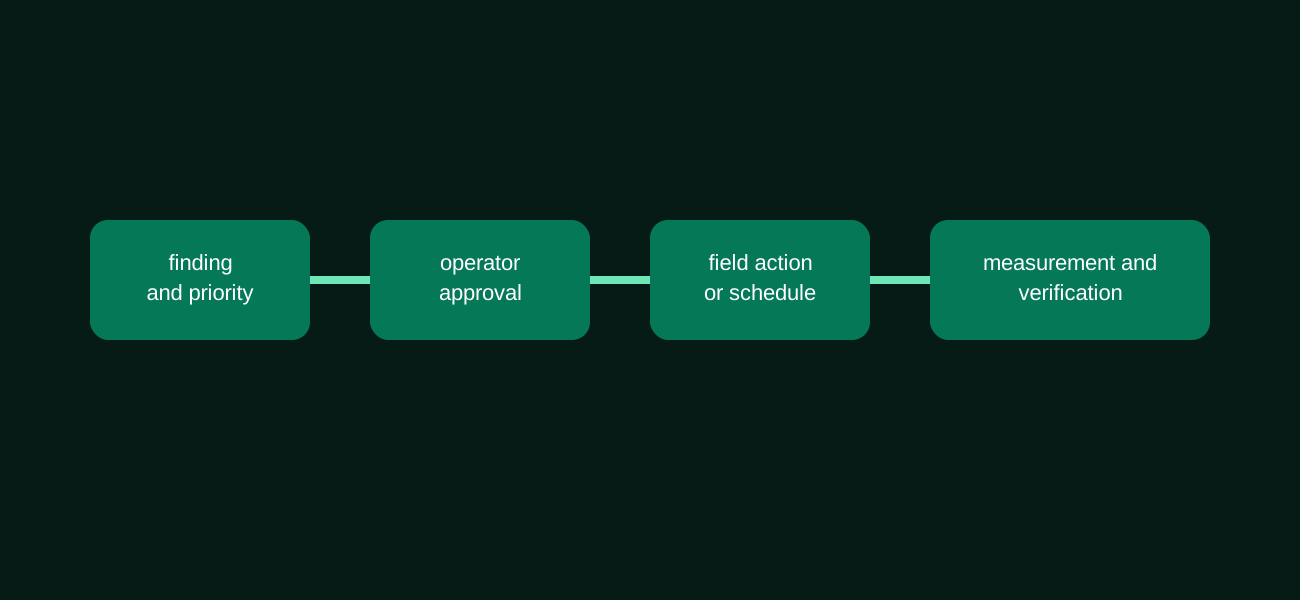
- 01Map source controllers and common connection
- 02Define source priority and constraints
- 03Calculate plant objective
- 04Distribute approved setpoints
- 05Verify source response and curtailment record
Data sources and integrations
Connect the evidence that explains the decision.
- Plant meters and analyzers
- Inverters, turbine and storage controllers
- Weather and irradiance stations
- Point-of-connection measurements
- Plant SCADA and dispatch context
Governance and resilience
Grid-code and TEİAŞ requirements depend on the connection agreement, applicable technical criteria and tested project configuration. Software does not create compliance automatically.
Protocol roles, OEM compatibility, data retention, control limits and failure behaviour must be confirmed from the engineering-approved release and project documents.
Outcomes and KPI framework
Measure the operating result, not only the software activity.
Traceable plant and grid-interface control
Use an agreed baseline, operational definition and evidence source before assigning a target.
Consistent data quality and operational context
Use an agreed baseline, operational definition and evidence source before assigning a target.
Clear route from alarm or setpoint to accountable action
Use an agreed baseline, operational definition and evidence source before assigning a target.
Project-specific test and acceptance evidence
Use an agreed baseline, operational definition and evidence source before assigning a target.
Solution architecture
Make responsibility visible from field to enterprise.
EnergyPortal provides central operations and governed analytics, enPowerManager owns qualified plant-level control, Scadify connects and executes at the field edge, and Enlogy engineering defines integration, testing and commissioning responsibilities. The architecture separates observation, recommendation, human-approved action and local execution so that each team can see what it owns.
Engineering and implementation
Move from architecture to accepted operation.
Engineering scope can include single-line review, control responsibility, OEM/protocol assessment, network design, FAT/SAT, commissioning, grid tests, training and lifecycle support. Exact supply and acceptance responsibility is project-specific.
Publication boundary
Capabilities are described as supported or project-configured where appropriate. Customer identities, quantified results, certifications and regulatory acceptance are not inferred from the solution page.
Related solutions and products
Continue with the next operational question.
FAQ
Questions to resolve before implementation.
Can an existing wind plant be extended with solar?
A hybrid extension can be assessed when the electrical topology, source controllers, grid interface and control responsibilities are compatible.
How are wind and solar priorities selected?
Priority, allocation and curtailment rules are defined in the project control architecture and approved operating policy.
Can internal consumption be included?
Yes, where meters, loads, operating policy and the control responsibility are included in the engineered scope.
Next step