Commercial Buildings and Campuses

Connect building automation with energy performance and accountable action.

Connect BMS, HVAC, lighting, meters, water, occupancy, schedules and workflows for building and campus energy performance and operations.

Discuss Your Project
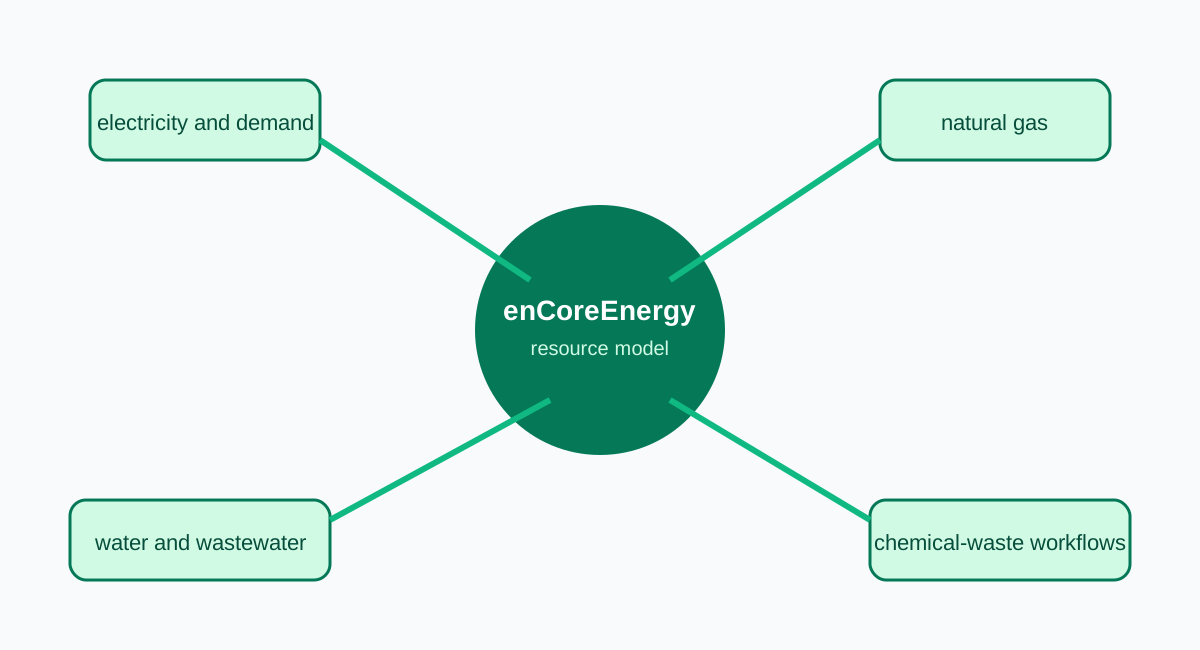
Commercial building and campus optimisation connecting BMS, HVAC, lighting, water and workflows
Conceptual architecture; final interfaces, controls and acceptance criteria are confirmed per project.

Who this is for

  • Building owners and facility managers
  • Campus operations
  • Energy and sustainability teams
  • BMS and maintenance providers

Typical assets and infrastructure

  • BMS, HVAC, chillers, boilers and AHUs
  • Lighting, water and pumps
  • Occupancy, schedules and tenant/department context
  • Meters and maintenance systems

Operational problems

  • Building automation data is not connected to performance and action workflows.
  • Comfort, process and equipment protection constrain optimisation.
  • Campuses need common policy with building-specific equipment context.

Data sources

  • Electricity, water and submeter data
  • Temperature, humidity, weather and occupancy
  • BMS equipment state and setpoints
  • Schedules, alarms and work orders

Capabilities

A connected operating model for commercial buildings and campuses.

BMS-integrated and BMS-augmenting operation

Configured around approved data, control, safety and responsibility boundaries.

HVAC, lighting, water and pump analytics

Configured around approved data, control, safety and responsibility boundaries.

Occupancy/weather-aware schedules

Configured around approved data, control, safety and responsibility boundaries.

Tenant or department allocation

Configured around approved data, control, safety and responsibility boundaries.

Peak demand, maintenance and operator workflows

Configured around approved data, control, safety and responsibility boundaries.

Workflow

From field context to accountable action.

  1. 01Map buildings, systems and constraints
  2. 02Connect BMS, meters and context
  3. 03Identify schedule or equipment opportunity
  4. 04Approve bounded control or workflow
  5. 05Verify comfort and energy outcome

Analytics and reporting

  • Building and campus benchmarking
  • Comfort and schedule compliance
  • Energy intensity and demand
  • Equipment runtime and maintenance indicators

Engineering and resilience

Engineering can cover meter and asset inventory, baseline design, process and interlock review, pilot/rollout planning, field integration, commissioning, operator training and measurement/verification planning.

Security and operational continuity

Keep tenant, site and role boundaries explicit. Direct control depends on installed BMS/PLC/Scadify systems, safety interlocks, customer policy and approved change paths.

Publication-safe evidence

Evidence without exposing customer details.

Use anonymous commercial-building and campus patterns; no identifiable facility or tenant details are required.

Related industries

Next step

Discuss the operating model your industry requires.

Discuss Your Project