Field Automation
Keep measurement and control reliable at the field edge
Local acquisition, telemetry, protocols, HMI and resilient edge execution.
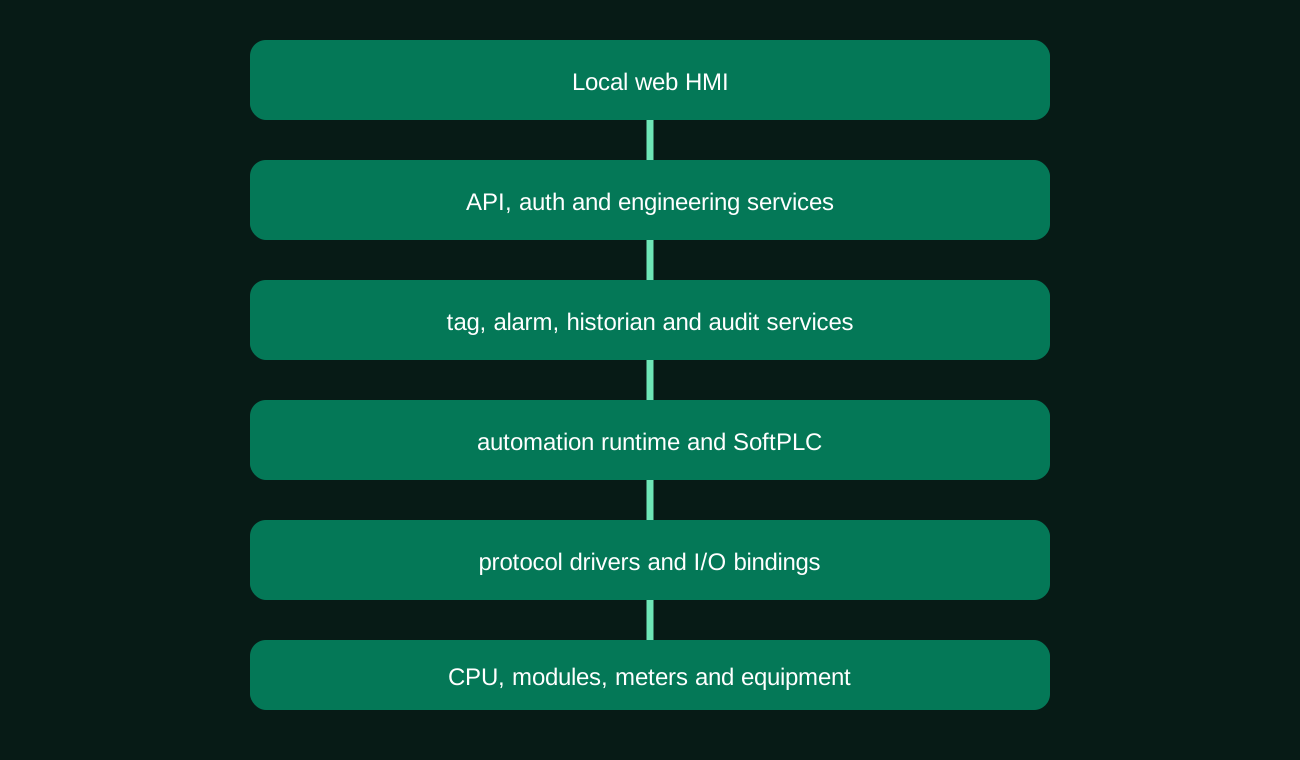
Products and delivery responsibilities
Assemble the operating stack around the action.
Solution selection
Choose the operational problem you need to solve.
Industrial Edge Control and Local Automation
Run local acquisition, automation, alarms, historian and governed field commands with Scadify’s local-first industrial edge architecture.
Explore this solution →Industrial Telemetry and Remote Site Monitoring
Acquire, buffer and govern remote-site telemetry, device health, events and commands across unreliable networks.
Explore this solution →Industrial IoT and Protocol Integration
Normalise approved industrial protocols, device maps, quality, units and commands into a governed field-to-enterprise data model.
Explore this solution →Local SCADA and HMI for Industrial Sites
Provide site operators with local status, alarms, trends, controls and diagnostics that continue without central connectivity.
Explore this solution →Legacy SCADA and Automation Modernisation
Modernise brownfield SCADA, PLC, RTU and telemetry systems through staged integration, coexistence, migration and validated cutover.
Explore this solution →Operational workflow
From operational context to measured action.
- 01Bind signals to canonical tags
- 02Validate and deploy approved logic
- 03Run local acquisition and automation
- 04Record events, commands and health
- 05Synchronise central evidence when connected
Data sources and integrations
Connect the evidence that explains the decision.
- Meters, sensors, analyzers and actuators
- PLCs, RTUs, BMS and existing SCADA
- Modbus, MQTT and project-qualified telecontrol interfaces
- Local alarms, commands, deployments and audit logs
- Central configuration and operational policies
Governance and resilience
Scadify is intended for non-safety and project-qualified automation unless a separately validated safety architecture exists. Protocol maturity, hardware and certification status follow the release matrix.
Protocol roles, OEM compatibility, data retention, control limits and failure behaviour must be confirmed from the engineering-approved release and project documents.