Operate and Support

Keep the accepted system supportable as sites, devices and operating needs change.

Lifecycle services make operational ownership visible through configurable support scope, incident handling, health review, controlled change, backup practices and expansion planning.

Discuss Your Project
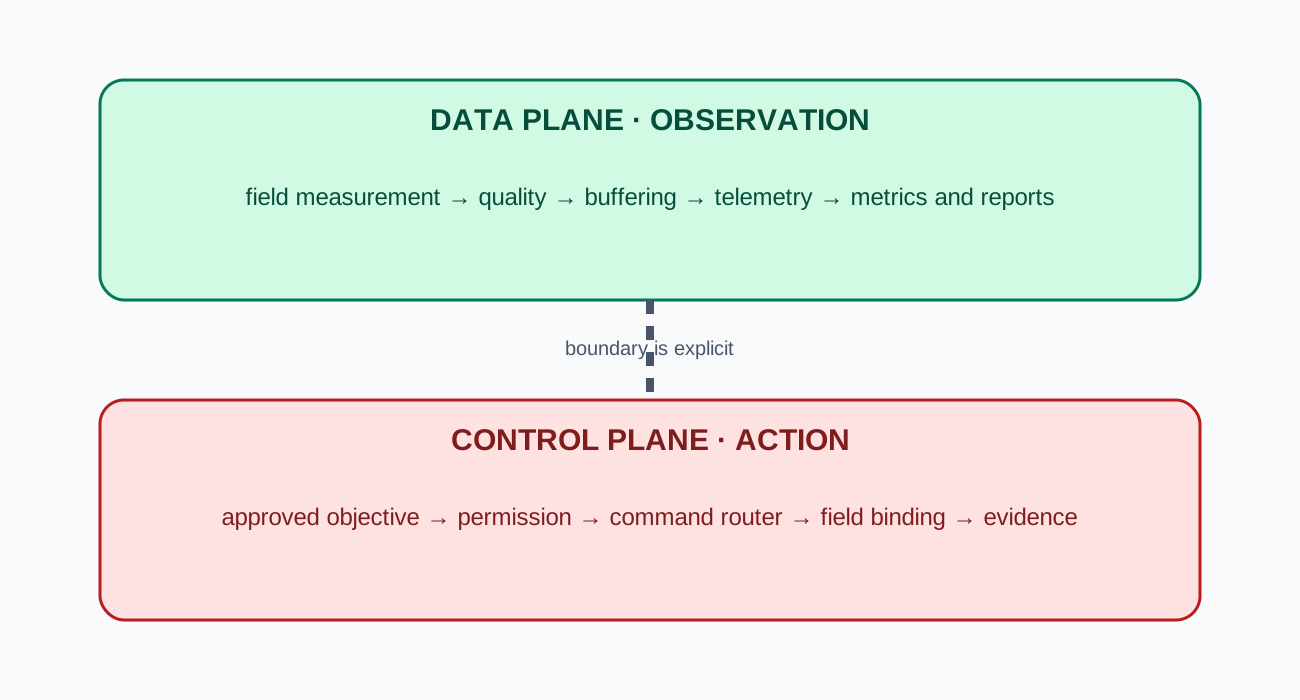
Lifecycle support model connecting monitoring, incidents, controlled changes, backups and improvement
Conceptual engineering view; final scope, interfaces and acceptance criteria are project-specific.

Project risks this service addresses

  • Support begins without a clear system baseline or escalation route.
  • Updates and configuration changes are made without evidence or rollback planning.
  • Growing sites and obsolete devices create lifecycle risk.

Engineering scope

  • Remote and on-site support according to agreed scope
  • Incident, request, escalation and defect management
  • Preventive maintenance, health monitoring and performance review
  • Software updates, configuration, backup and recovery practices
  • Protocol/device lifecycle, expansion and obsolescence planning

Required inputs and prerequisites

  • Accepted baseline and configuration package
  • Named contacts, support hours and severity model
  • Remote-access, monitoring and security conditions
  • Customer responsibilities, exclusions and change process

Delivery workflow

  • Establish the accepted baseline and support boundary
  • Monitor health or receive a defined service request
  • Classify, investigate and communicate the issue
  • Apply approved workaround, change or maintenance action
  • Review evidence, closure and lifecycle improvement

Deliverables

Evidence that can be reviewed, tested and handed over.

Support model and responsibility matrix

Channels, roles, escalation, exclusions and customer prerequisites.

shared

Service and incident records

Requests, actions, decisions, evidence and closure status.

enlogy

Lifecycle review and improvement plan

Health, updates, expansion, obsolescence and risk recommendations.

shared

Acceptance and evidence framework

  • Support hours and severity definitions are explicit
  • Response, work-start and resolution targets are not conflated
  • Changes and backups follow the approved process
  • Customer exclusions and responsibilities are visible

Responsibility matrix

Make interfaces explicit before work starts.

Responsibilities for Support, SLA and Lifecycle Services
RoleBoundary
EnlogyResponsible for the contracted engineering, software, integration and documentation scope.
CustomerProvides site information, decisions, access, operating constraints and acceptance participation.
EPC, OEM or installation partnerParticipates according to the approved interface and responsibility matrix.
Grid operator or authorityDefines applicable requirements and remains responsible for formal approval or acceptance.

Products used

Relevant solutions

Relevant industries

Customer results

Technical resources

Related services

Continue through the delivery lifecycle.

Questions to resolve first

Are fixed response times published?

No. Response, work-start, workaround, resolution and availability commitments are defined only in an approved service agreement.

Can support include on-site work?

On-site support can be scoped according to location, qualifications, access, contract and partner responsibilities.

Does support include cybersecurity patching?

Patch and update responsibilities, testing, maintenance windows and exclusions are defined in the applicable lifecycle scope.

Scope and publication boundary

No response time, availability guarantee, service level, staffing or geographic coverage claim is published. Final responsibilities, qualifications, test criteria, support terms and regulatory acceptance remain subject to the project contract and approved documentation.

Next step

Discuss your support, sla and lifecycle services requirements.

Discuss Your Project