Water and Wastewater Infrastructure

Operate distributed water infrastructure with local resilience and central accountability.

Connect pumping stations, reservoirs, flow, pressure, treatment assets, telemetry, alarms and energy analytics for water and wastewater operations.

Discuss Your Project
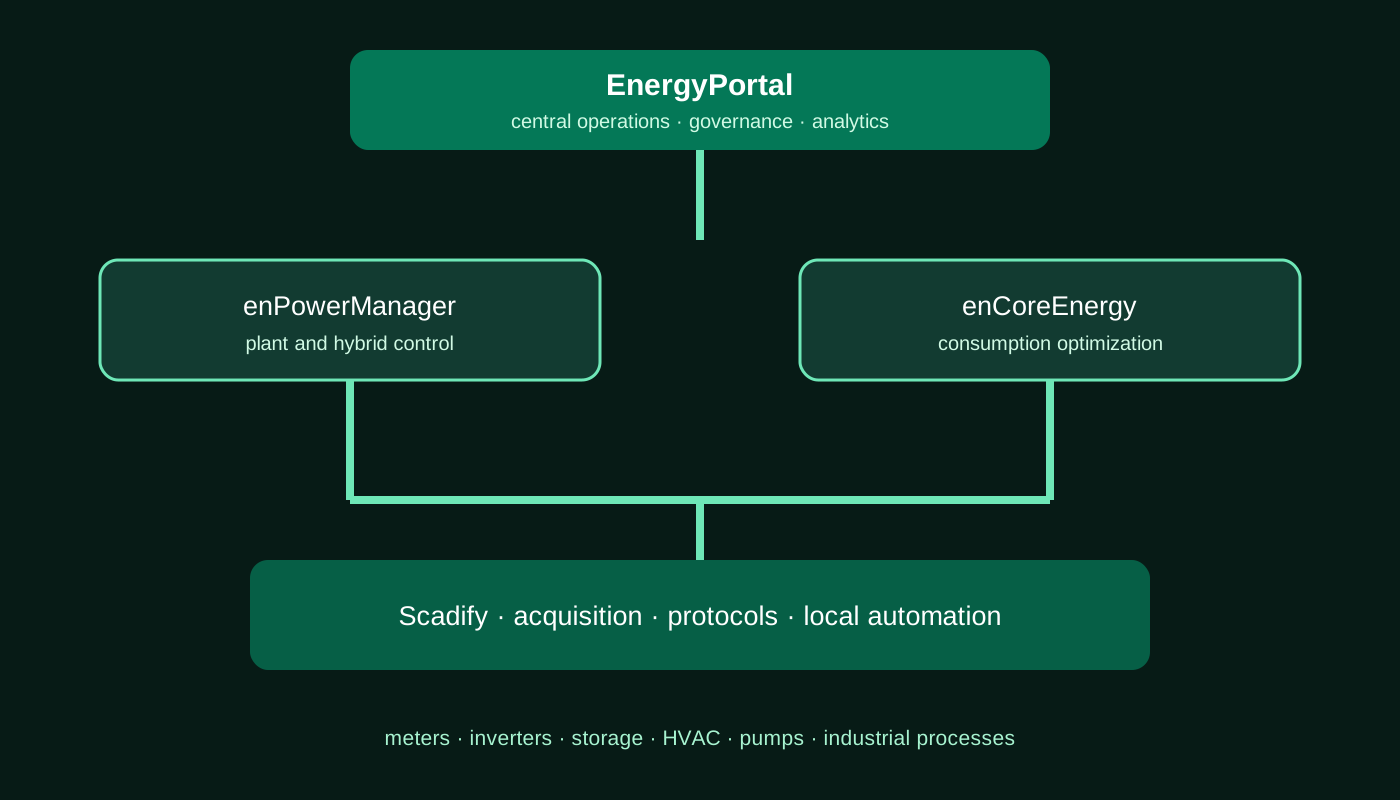
Water and wastewater telemetry and local control architecture for remote infrastructure
Conceptual architecture; final interfaces, controls and acceptance criteria are confirmed per project.

Who this is for

  • Water utility operators
  • Pumping and maintenance teams
  • Infrastructure EPCs and integrators
  • Energy and environmental stakeholders

Typical assets and infrastructure

  • Remote pumping stations
  • Reservoirs, tanks, flow and pressure instruments
  • Treatment and discharge-related assets
  • Local PLC/RTU, HMI and communications

Operational problems

  • Remote stations must remain observable and locally safe through communication outages.
  • Pump runtime, hydraulic context and energy use are managed separately.
  • Environmental records and maintenance evidence need clear ownership.

Data sources

  • Flow, pressure, level and pump state
  • Electricity and energy intensity
  • Water balance and discharge-related records
  • Alarms, maintenance and communications health

Capabilities

A connected operating model for water and wastewater infrastructure.

Remote telemetry and store-and-forward

Configured around approved data, control, safety and responsibility boundaries.

Pump sequencing, level and pressure context

Configured around approved data, control, safety and responsibility boundaries.

Local HMI, alarms and historian

Configured around approved data, control, safety and responsibility boundaries.

Water/wastewater resource analytics

Configured around approved data, control, safety and responsibility boundaries.

Central reporting and maintenance workflows

Configured around approved data, control, safety and responsibility boundaries.

Workflow

From field context to accountable action.

  1. 01Map stations and local control responsibility
  2. 02Acquire and qualify hydraulic/energy signals
  3. 03Detect event, imbalance or communications loss
  4. 04Run approved local response or task
  5. 05Synchronise evidence and report

Analytics and reporting

  • Energy per unit volume
  • Pump runtime and sequencing
  • Water balance and base-flow indicators
  • Alarm, outage and maintenance patterns

Engineering and resilience

Engineering can cover site assessment, I/O and protocol mapping, architecture, network and cybersecurity boundaries, FAT/SAT, commissioning, migration, training and lifecycle support.

Security and operational continuity

Design for local operation, controlled remote access, auditability, network segmentation, backup/recovery and project-specific protocol and role boundaries. Certification is not inferred from architecture language.

Publication-safe evidence

Evidence without exposing customer details.

Describe water and wastewater applications anonymously. Do not claim laboratory, treatment or environmental certification functions without documentary proof.

Related industries

Next step

Discuss the operating model your industry requires.

Discuss Your Project