Industrial Manufacturing

Reduce resource intensity without losing sight of production.

Connect factory electricity, gas, water, wastewater, utilities and production context for process-aware energy and resource optimisation.

Discuss Your Project
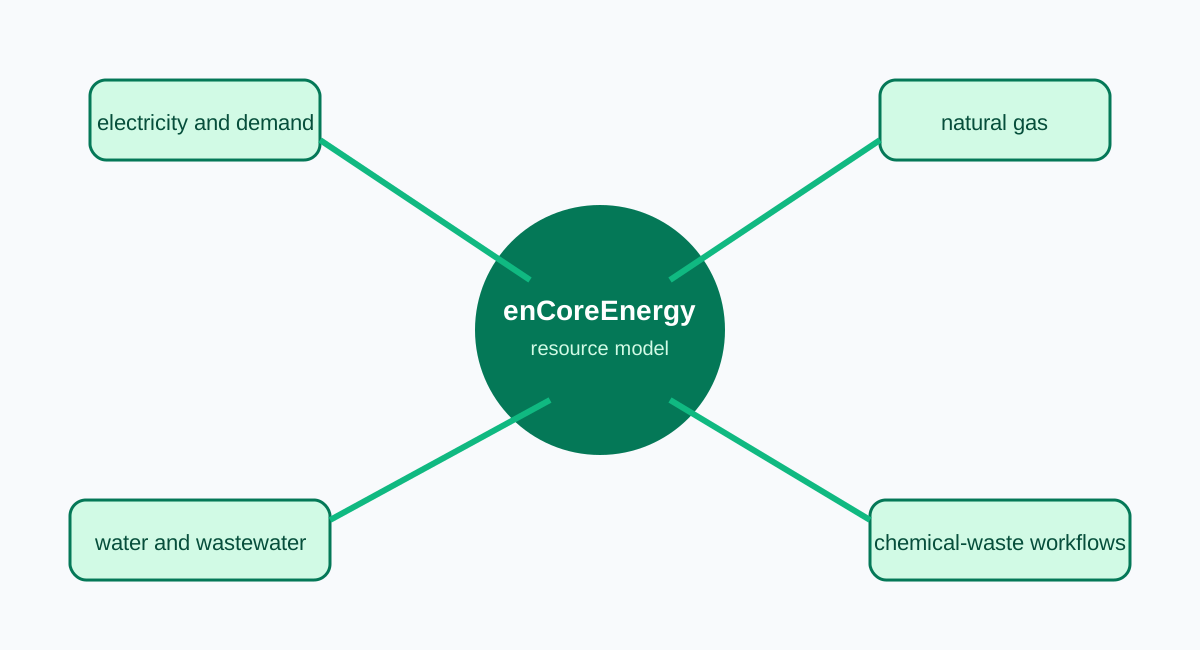
Industrial manufacturing resource management connecting utilities, production context and workflows
Conceptual architecture; final interfaces, controls and acceptance criteria are confirmed per project.

Who this is for

  • Plant and energy managers
  • Production and maintenance teams
  • EHS and sustainability stakeholders
  • Industrial engineering and IT/OT teams

Typical assets and infrastructure

  • Meters, analyzers, pumps and motors
  • HVAC, heating/cooling and utility systems
  • PLC, BMS, MES and production equipment
  • Wastewater and chemical-waste records

Operational problems

  • Energy use cannot be explained without production and process context.
  • Utility, wastewater and chemical-waste information is fragmented across teams.
  • Recommendations must respect quality, safety, throughput and operator constraints.

Data sources

  • Electricity, gas and water
  • Production, shift, batch and recipe context
  • Machine state, maintenance and work orders
  • Wastewater, waste categories and documents

Capabilities

A connected operating model for industrial manufacturing.

Process-aware baselines and energy intensity

Configured around approved data, control, safety and responsibility boundaries.

Electricity, gas, water and wastewater model

Configured around approved data, control, safety and responsibility boundaries.

AI-supported anomaly and opportunity prioritisation

Configured around approved data, control, safety and responsibility boundaries.

Human-approved or implemented control paths

Configured around approved data, control, safety and responsibility boundaries.

Measurement, verification, workflow and evidence

Configured around approved data, control, safety and responsibility boundaries.

Workflow

From field context to accountable action.

  1. 01Map resources and production boundary
  2. 02Connect utility and process data
  3. 03Explain expected versus abnormal use
  4. 04Approve action within constraints
  5. 05Verify resource and operational outcome

Analytics and reporting

  • Energy per unit of production
  • Shift, batch and machine-state deviation
  • Water/gas/electricity intensity
  • Idle loads and equipment-performance indicators
  • Documented M&V evidence

Engineering and resilience

Engineering can cover meter and asset inventory, baseline design, process and interlock review, pilot/rollout planning, field integration, commissioning, operator training and measurement/verification planning.

Security and operational continuity

Keep tenant, site and role boundaries explicit. Direct control depends on installed BMS/PLC/Scadify systems, safety interlocks, customer policy and approved change paths.

Publication-safe evidence

Evidence without exposing customer details.

An industrial manufacturing deployment covering integrated electricity, natural gas, water, wastewater and chemical-waste-related workflows may be described anonymously. Foretek name and logo require approval.

Related industries

Next step

Discuss the operating model your industry requires.

Discuss Your Project