Integrate and Deliver

Prove the system against its requirements—not only against a checklist.

FAT, SAT and commissioning are separate evidence stages that progressively verify configured systems, installed interfaces, live operation and handover readiness.

Discuss Your Project
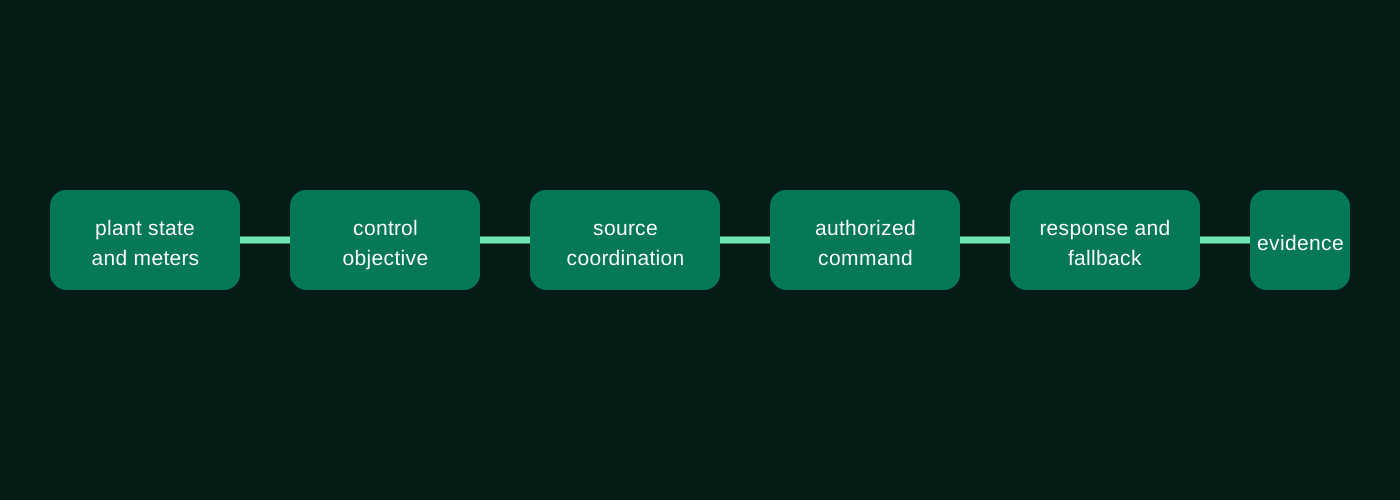
FAT, SAT and commissioning stage gates from simulated checks to live activation and handover
Conceptual engineering view; final scope, interfaces and acceptance criteria are project-specific.

Project risks this service addresses

  • Factory checks, site checks and live commissioning are treated as one activity.
  • Defects and exceptions do not have owners or closure evidence.
  • Operators receive a system before controls, alarms, reports and backups are verified.

Engineering scope

  • FAT hardware, wiring, I/O, simulation, protocols, screens, alarms and PPC logic
  • SAT installed-device, end-to-end, command, interlock and time-synchronisation tests
  • Controlled activation, parameter confirmation, live integration and tuning
  • Defect tracking, punch-list closure and handover evidence

Required inputs and prerequisites

  • Approved requirements, drawings, tag lists and test protocols
  • Simulators, test data, customer witnesses and access
  • Installed equipment and safe operating conditions
  • Defined pass/fail and retest criteria

Delivery workflow

  • Freeze test basis and prerequisites
  • Execute FAT with simulated inputs and expected outputs
  • Verify installation and execute SAT
  • Activate and tune approved live functions
  • Close defects and release handover evidence

Deliverables

Evidence that can be reviewed, tested and handed over.

FAT protocol and records

Factory checks, simulations, exceptions and witness evidence.

shared

SAT protocol and records

Installed signal, command, alarm, historian and interface evidence.

shared

Commissioning and punch-list report

Activation status, tuning, defects, owners and handover readiness.

shared

Acceptance and evidence framework

  • FAT and SAT results are separately identifiable
  • Failed or deferred tests have owners and retest paths
  • Live activation is controlled and authorised
  • Handover prerequisites and exceptions are visible

Responsibility matrix

Make interfaces explicit before work starts.

Responsibilities for FAT, SAT and Commissioning
RoleBoundary
EnlogyResponsible for the contracted engineering, software, integration and documentation scope.
CustomerProvides site information, decisions, access, operating constraints and acceptance participation.
EPC, OEM or installation partnerParticipates according to the approved interface and responsibility matrix.
Grid operator or authorityDefines applicable requirements and remains responsible for formal approval or acceptance.

Products used

Relevant solutions

Relevant industries

Customer results

Technical resources

Related services

Continue through the delivery lifecycle.

Questions to resolve first

Are FAT, SAT and commissioning the same?

No. FAT verifies the factory/configured baseline, SAT verifies installed interfaces, and commissioning controls live activation and operational readiness.

Can customer witnesses participate?

Witness points and participation are defined in the approved test and acceptance plan.

Does successful FAT prove grid performance?

No. Live plant and grid-performance tests require the applicable site, measurement and authority conditions.

Scope and publication boundary

Test evidence is project-specific and does not imply universal acceptance, availability or performance results. Final responsibilities, qualifications, test criteria, support terms and regulatory acceptance remain subject to the project contract and approved documentation.

Next step

Discuss your fat, sat and commissioning requirements.

Discuss Your Project