Critical Infrastructure

Keep essential field operation local, governed and observable.

Build resilient field monitoring, local control, telemetry, central operations, audit and cybersecurity boundaries for critical infrastructure.

Discuss Your Project
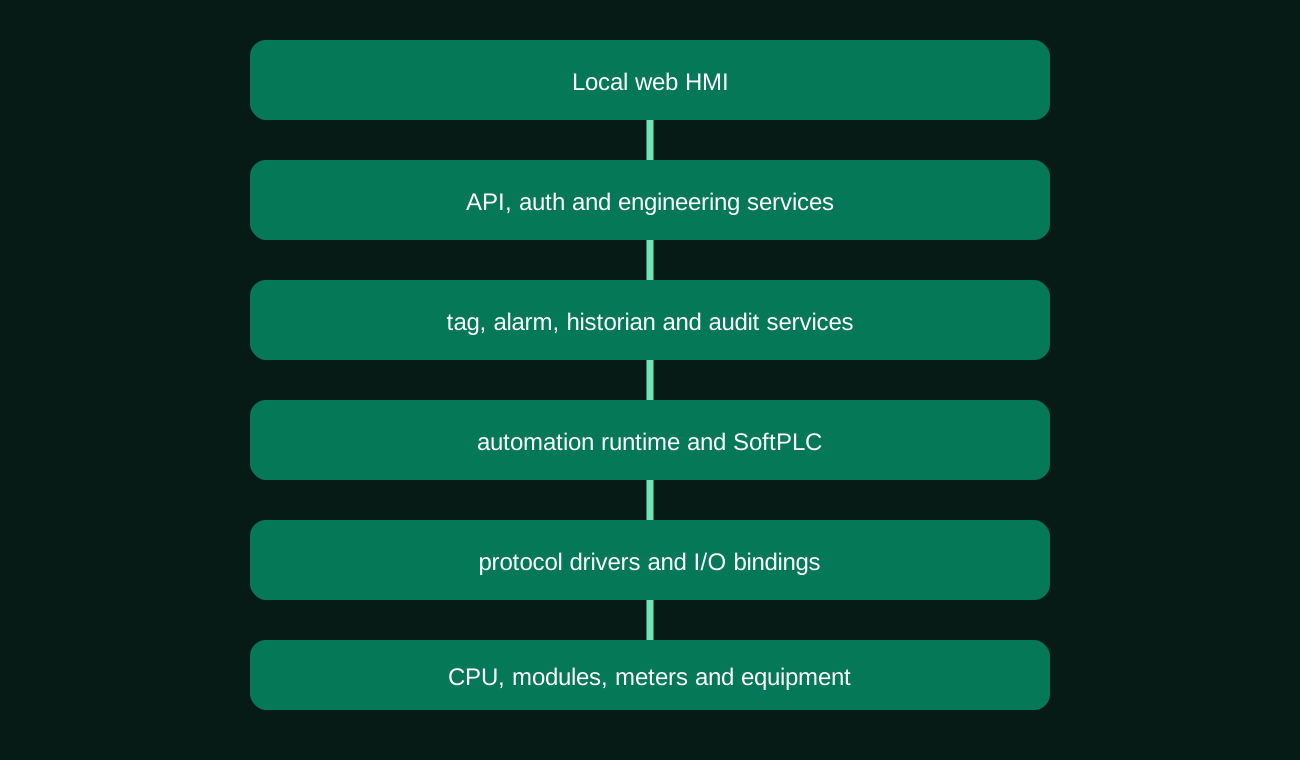
Critical infrastructure edge architecture with local operation, central oversight and governed remote access
Conceptual architecture; final interfaces, controls and acceptance criteria are confirmed per project.

Who this is for

  • Critical-asset operators
  • OT and cybersecurity teams
  • Infrastructure owners and EPCs
  • Maintenance and incident-response stakeholders

Typical assets and infrastructure

  • Remote field controllers and sensors
  • Power, water, HVAC and utility systems
  • Local HMI, alarms and historian
  • Networks, access and backup infrastructure

Operational problems

  • Central connectivity loss must not become loss of essential local operation.
  • Remote access, updates and commands need strict governance and auditability.
  • Legacy devices and recovery requirements are often poorly documented.

Data sources

  • Telemetry, alarms and device health
  • Local runtime and command evidence
  • Maintenance, backup and recovery records
  • Site, network and communications status

Capabilities

A connected operating model for critical infrastructure.

Local-first edge execution

Configured around approved data, control, safety and responsibility boundaries.

Central visibility and role boundaries

Configured around approved data, control, safety and responsibility boundaries.

Store-and-forward and communications health

Configured around approved data, control, safety and responsibility boundaries.

Controlled updates, rollback and audit

Configured around approved data, control, safety and responsibility boundaries.

Project-specific redundancy, backup and recovery design

Configured around approved data, control, safety and responsibility boundaries.

Workflow

From field context to accountable action.

  1. 01Classify asset and failure responsibilities
  2. 02Define local and central control boundary
  3. 03Acquire health and operational evidence
  4. 04Escalate or execute approved action
  5. 05Review audit, recovery and lifecycle evidence

Analytics and reporting

  • Availability and communications health
  • Alarm escalation and response
  • Asset condition and maintenance
  • Data quality and recovery evidence

Engineering and resilience

Engineering can cover site assessment, I/O and protocol mapping, architecture, network and cybersecurity boundaries, FAT/SAT, commissioning, migration, training and lifecycle support.

Security and operational continuity

Design for local operation, controlled remote access, auditability, network segmentation, backup/recovery and project-specific protocol and role boundaries. Certification is not inferred from architecture language.

Publication-safe evidence

Evidence without exposing customer details.

Critical-infrastructure case studies require explicit customer and security approval; the public page uses only generic operating patterns.

Related industries

Next step

Discuss the operating model your industry requires.

Discuss Your Project