Wind and Hybrid Power Plants

Coordinate multiple generation sources as one controllable plant.

Coordinate wind, solar and storage with plant-level PPC, SCADA integration, point-of-connection control, analytics and traceable operations.

Discuss Your Project
Wind and solar hybrid plant control architecture with PPC and shared point of connection
Conceptual architecture; final interfaces, controls and acceptance criteria are confirmed per project.

Who this is for

  • Wind and hybrid plant owners
  • EPC and PPC engineers
  • Grid-interface and O&M teams
  • Asset and portfolio managers

Typical assets and infrastructure

  • Wind-turbine SCADA and controller interfaces
  • Solar inverters and source meters
  • BESS, substation and point-of-connection systems
  • Weather, protection and dispatch interfaces

Operational problems

  • Multiple sources compete for a shared export and ramp objective.
  • Source controllers, grid measurements and central reports do not share one responsibility model.
  • Operators need local fallback and auditable evidence of what the plant was asked to do.

Data sources

  • Active/reactive power, voltage and frequency
  • Source availability and operating state
  • Grid setpoints, curtailment and maintenance context
  • Event, command and response history

Capabilities

A connected operating model for wind and hybrid power plants.

Wind, solar, biomass, hydro and storage combinations where engineered

Configured around approved data, control, safety and responsibility boundaries.

Master/slave PPC role architecture

Configured around approved data, control, safety and responsibility boundaries.

Active/reactive, voltage, power-factor and ramp objectives after verification

Configured around approved data, control, safety and responsibility boundaries.

Hybrid allocation, production priority and curtailment

Configured around approved data, control, safety and responsibility boundaries.

Local fallback, command history and central performance analytics

Configured around approved data, control, safety and responsibility boundaries.

Workflow

From field context to accountable action.

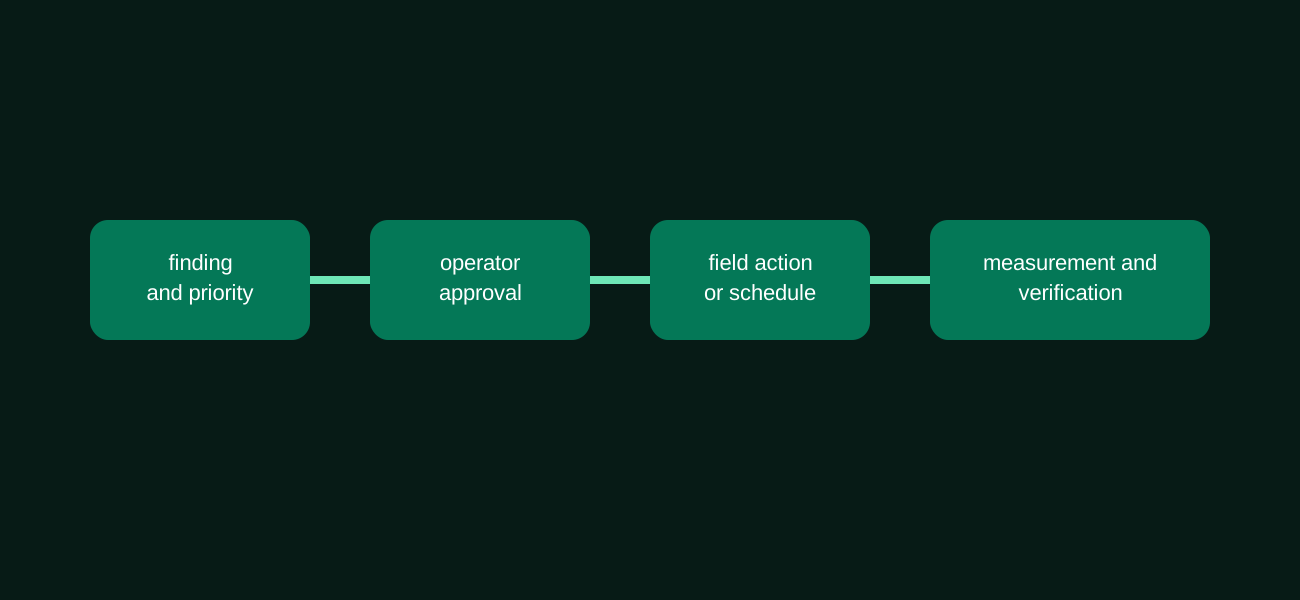
  1. 01Review source topology and common connection
  2. 02Define source priority and control authority
  3. 03Read source, meter and grid state
  4. 04Distribute and execute approved objective
  5. 05Verify response, exception and operating evidence

Analytics and reporting

  • Hybrid source allocation and curtailment
  • Availability and actual-versus-expected production
  • Command response and data quality
  • Plant and fleet performance reporting

Engineering and resilience

Engineering can cover single-line and point-of-connection review, OEM/protocol assessment, control responsibility, network design, FAT/SAT, commissioning, grid tests, training and lifecycle support. Final supply and acceptance responsibilities are project-specific.

Security and operational continuity

Use segmented control networks, governed remote access, authenticated commands, least-privilege roles, local fallback, logging and project-specific backup/recovery. No automatic grid-code or security certification claim is made.

Publication-safe evidence

Evidence without exposing customer details.

Operational experience in a utility-scale wind and solar hybrid project can be described anonymously. VESTAS, capacity, location, customer and duration remain approval-gated.

Related industries

Next step

Discuss the operating model your industry requires.

Discuss Your Project