Integrate and Deliver

Connect systems through governed interfaces instead of one-off data bridges.

Enlogy integrates its products with documented field, plant, building, enterprise and reporting systems while keeping data ownership, authentication, failure behaviour and support boundaries explicit.

Discuss Your Project
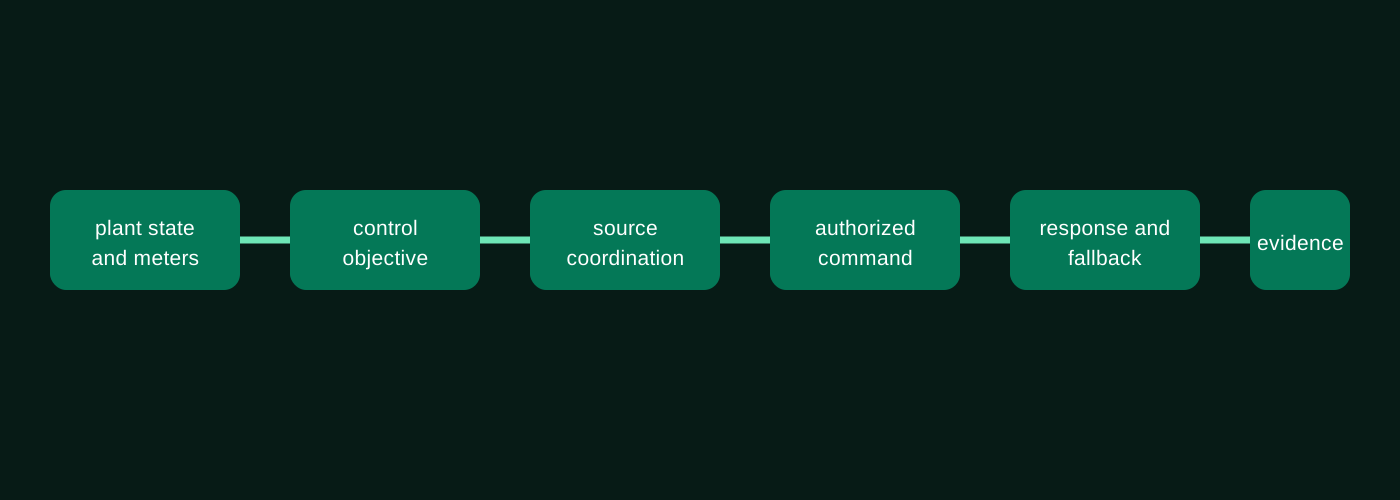
Software integration flow connecting field protocols, Enlogy products, APIs, workflows and enterprise systems
Conceptual engineering view; final scope, interfaces and acceptance criteria are project-specific.

Project risks this service addresses

  • Interfaces are built as isolated bridges without ownership or lifecycle documentation.
  • Protocol and write-authority assumptions create operational risk.
  • Enterprise workflows cannot trust field data quality or failure status.

Engineering scope

  • EnergyPortal, enPowerManager, enCoreEnergy and Scadify integration
  • SCADA, PLC, RTU, inverter, turbine, meter, BMS, HVAC, lighting, pump and BESS interfaces
  • APIs, databases, MQTT, Modbus, IEC 60870-5-104 and OPC UA where documented and qualified
  • ERP, CMMS, identity, reporting and workflow interfaces
  • Authentication, test data, failure handling and change management

Required inputs and prerequisites

  • Interface specifications and system-owner contacts
  • Network access, credentials through approved secure channels and test data
  • Protocol, tag, API and data-retention requirements
  • Acceptance criteria and support responsibilities

Delivery workflow

  • Define interface ownership and data contract
  • Map source data, commands, identity and network boundaries
  • Implement or configure the qualified integration
  • Test normal, invalid, delayed and unavailable states
  • Document handover, support and change management

Deliverables

Evidence that can be reviewed, tested and handed over.

Integration and protocol matrix

Available, project-integrated, validation or roadmap status is explicit.

enlogy

Interface-control document

Data, authentication, ownership, failure and test boundaries.

shared

Integration test evidence

Positive, negative, outage, quality and recovery scenarios within scope.

shared

Acceptance and evidence framework

  • Every interface has an owner and acceptance method
  • Protocols are labelled by release or project status
  • Authentication and failure paths are tested
  • Support boundaries and changes are documented

Responsibility matrix

Make interfaces explicit before work starts.

Responsibilities for Software and Systems Integration
RoleBoundary
EnlogyResponsible for the contracted engineering, software, integration and documentation scope.
CustomerProvides site information, decisions, access, operating constraints and acceptance participation.
EPC, OEM or installation partnerParticipates according to the approved interface and responsibility matrix.
Grid operator or authorityDefines applicable requirements and remains responsible for formal approval or acceptance.

Products used

Relevant solutions

Relevant industries

Customer results

Technical resources

Related services

Continue through the delivery lifecycle.

Questions to resolve first

Does Enlogy support every OEM and protocol?

No. Compatibility is evaluated against the documented integration matrix, release status, project interface and write authority.

Can roadmap protocols be used in production?

Roadmap and validation items are not presented as released production capabilities.

Who owns the source data?

Data ownership, access and retention remain defined by the customer and source-system responsibility matrix.

Scope and publication boundary

Integration capability is described by documented interface scope, not by an unqualified universal protocol claim. Final responsibilities, qualifications, test criteria, support terms and regulatory acceptance remain subject to the project contract and approved documentation.

Next step

Discuss your software and systems integration requirements.

Discuss Your Project