Power Consumption
Optimise thermal systems without losing operational control
Use schedules, weather, occupancy, setpoints and equipment state to optimise HVAC, heating and cooling within comfort and process constraints.
Operational problem
Utility totals rarely explain the operational reason for consumption. Weather, production, shifts, occupancy, comfort, safety and equipment constraints must be connected before a recommendation can become a safe action.
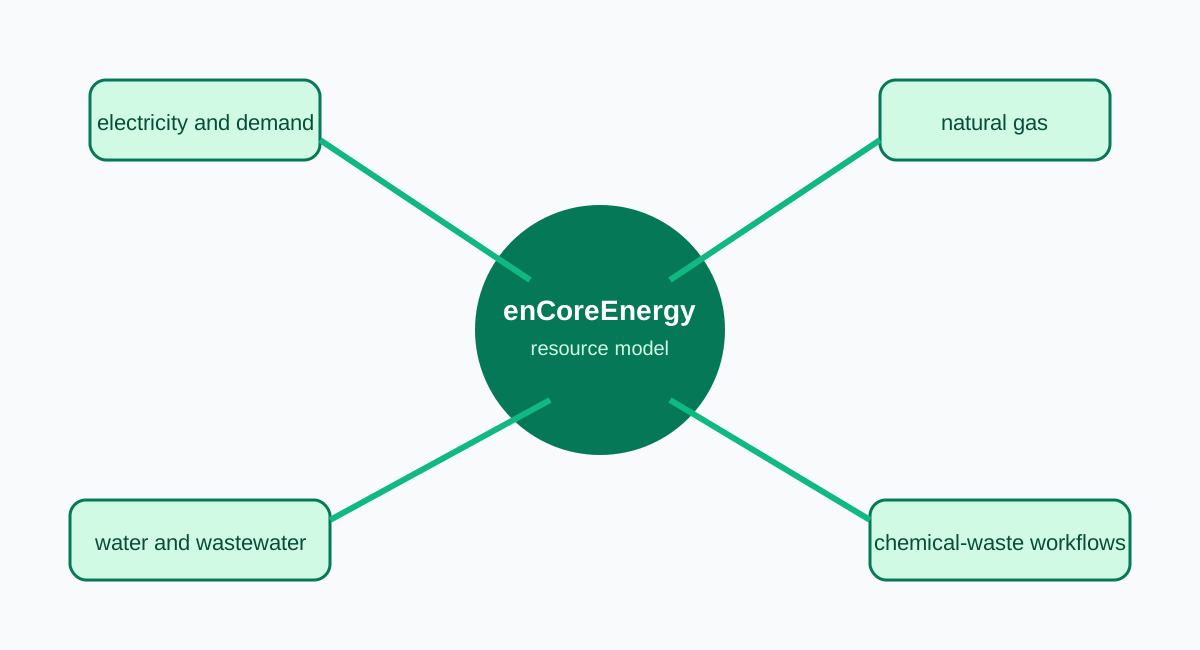
enCoreEnergy combines measurements with operational context, analytics, AI-supported recommendations, workflows and verification. Scadify or existing BMS/PLC systems provide qualified local acquisition and execution; EnergyPortal can consolidate enterprise portfolios.
Core capabilities
Temperature, humidity and occupancy context
Configured according to the project’s data, control, approval and operating boundaries.
Schedules, setpoints and exceptions
Configured according to the project’s data, control, approval and operating boundaries.
Chillers, boilers, AHUs and heat pumps
Configured according to the project’s data, control, approval and operating boundaries.
Comfort, process and safety constraints
Configured according to the project’s data, control, approval and operating boundaries.
Recommendation versus approved automatic control
Configured according to the project’s data, control, approval and operating boundaries.
Products and delivery responsibilities
Assemble the operating stack around the action.
Operational workflow
From operational context to measured action.
- 01Inventory thermal systems and constraints
- 02Collect environment and equipment state
- 03Model schedule and setpoint opportunities
- 04Approve or execute a bounded change
- 05Verify comfort, process and energy outcome
Data sources and integrations
Connect the evidence that explains the decision.
- Utility meters and submeters
- HVAC, lighting, pumps and equipment state
- Production, shifts, schedules and occupancy
- Weather, temperature and humidity
- Tariffs, invoices and maintenance context
Governance and resilience
Direct control is constrained by installed systems, safety interlocks, operating policy and customer approval. Recommendations, workflows and closed-loop control are separate modes.
Protocol roles, OEM compatibility, data retention, control limits and failure behaviour must be confirmed from the engineering-approved release and project documents.
Outcomes and KPI framework
Measure the operating result, not only the software activity.
Normalised energy-performance indicators
Use an agreed baseline, operational definition and evidence source before assigning a target.
Prioritised demand, schedule and equipment opportunities
Use an agreed baseline, operational definition and evidence source before assigning a target.
Human-approved actions with clear ownership
Use an agreed baseline, operational definition and evidence source before assigning a target.
Baseline and reporting-period evidence
Use an agreed baseline, operational definition and evidence source before assigning a target.
Solution architecture
Make responsibility visible from field to enterprise.
enCoreEnergy combines measurements with operational context, analytics, AI-supported recommendations, workflows and verification. Scadify or existing BMS/PLC systems provide qualified local acquisition and execution; EnergyPortal can consolidate enterprise portfolios. The architecture separates observation, recommendation, human-approved action and local execution so that each team can see what it owns.
Engineering and implementation
Move from architecture to accepted operation.
Engineering scope can include meter inventory, baseline design, significant-use analysis, interlock review, pilot acceptance criteria, field integration, commissioning, operator training and M&V planning.
Publication boundary
Capabilities are described as supported or project-configured where appropriate. Customer identities, quantified results, certifications and regulatory acceptance are not inferred from the solution page.
Related solutions and products
Continue with the next operational question.
FAQ
Questions to resolve before implementation.
Can every HVAC system be controlled?
Control depends on the installed BMS/PLC, interfaces, interlocks and approved operating policy.
Can weather and occupancy be included?
Yes, when those data sources are available and mapped to the facility operating model.
Are savings guaranteed?
No. Targets and results require project baselines, operating constraints and an agreed verification method.
Next step