EPC, OEM and System Integrators

Deliver repeatable energy and automation projects without forcing every site into one hardware model.

Standardise SCADA, PPC, telemetry, edge control, analytics, commissioning and lifecycle delivery across EPC, OEM and integration projects.

Discuss Your Project
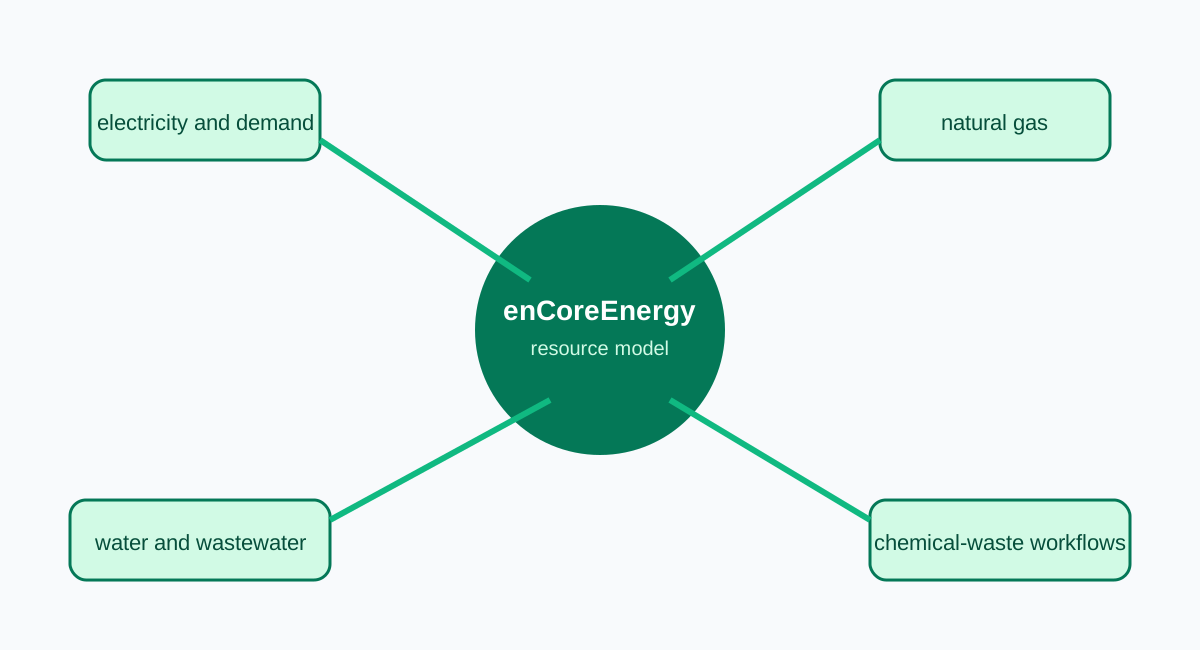
EPC and system integration workflow from interface design through FAT, commissioning and lifecycle support
Conceptual architecture; final interfaces, controls and acceptance criteria are confirmed per project.

Who this is for

  • EPC project teams
  • OEM and controls teams
  • System integrators
  • Owners defining interface and lifecycle responsibility

Typical assets and infrastructure

  • Plant and factory devices
  • PLCs, RTUs, meters and OEM systems
  • PPC, SCADA, telemetry and edge platforms
  • FAT/SAT, commissioning and configuration records

Operational problems

  • Each project repeats integration, configuration and commissioning work.
  • Hardware diversity makes standardisation difficult without clear interfaces.
  • Partner, owner and Enlogy responsibilities must be explicit in tenders and handover.

Data sources

  • Device templates and protocol maps
  • Project configuration and interface definitions
  • Test, commissioning and handover evidence
  • Lifecycle, support and change records

Capabilities

A connected operating model for epc, oem and system integrators.

Integration APIs and canonical device/tag model

Configured around approved data, control, safety and responsibility boundaries.

Project-qualified protocol and OEM interfaces

Configured around approved data, control, safety and responsibility boundaries.

Reusable configuration and deployment governance

Configured around approved data, control, safety and responsibility boundaries.

FAT/SAT, commissioning and documentation support

Configured around approved data, control, safety and responsibility boundaries.

Clear partner/customer responsibility boundaries

Configured around approved data, control, safety and responsibility boundaries.

Workflow

From field context to accountable action.

  1. 01Define project interface and responsibility matrix
  2. 02Build reusable device and configuration model
  3. 03Integrate and validate in FAT
  4. 04Commission and test at site
  5. 05Handover evidence and lifecycle support

Analytics and reporting

  • Project health and deployment history
  • Device/data quality and integration coverage
  • Commissioning defects and workflow status
  • Central operational and performance reporting

Engineering and resilience

Engineering can cover site assessment, I/O and protocol mapping, architecture, network and cybersecurity boundaries, FAT/SAT, commissioning, migration, training and lifecycle support.

Security and operational continuity

Design for local operation, controlled remote access, auditability, network segmentation, backup/recovery and project-specific protocol and role boundaries. Certification is not inferred from architecture language.

Publication-safe evidence

Evidence without exposing customer details.

Partner and OEM relationships, white-label options and named references require active agreement and written publication approval.

Related industries

Next step

Discuss the operating model your industry requires.

Discuss Your Project